I still remember the first time I heard about Forex trading. It was 2018, and a friend, who was always chasing the next big thing, told me about this massive, 24-hour market where you could trade currencies and, supposedly, make a fortune from your laptop. The idea was intoxicating. A global market, always open, with the potential for significant profit? It sounded like the ultimate financial freedom. But when I actually tried to dive in, I was hit with a tidal wave of jargon, complex charts, and so-called gurus promising guaranteed wins. It was overwhelming, and honestly, a bit discouraging. Look, the world of currency trading can feel like an exclusive club with a secret language. That’s why I’ve put together this forex trading guide—the guide I wish I had when I started. This isn’t about get-rich-quick schemes or “secret” formulas. It’s a real, no-nonsense roadmap designed to take you from a complete beginner to a confident, and hopefully, profitable trader. We’ll break down everything you need to know, step-by-step, without the confusing fluff.
Table of Contents
- What is Forex Trading, Really?
- The Building Blocks: Understanding Currency Pairs
- How to Trade Forex: A Step-by-Step Guide for Beginners
- Two Schools of Thought: Technical vs. Fundamental Analysis
- Forex Trading Strategies for Different Styles
- The Unsexy But Crucial Part: Risk Management
- The Final Boss: Trading Psychology
- Frequently Asked Questions (FAQ)
What is Forex Trading, Really?
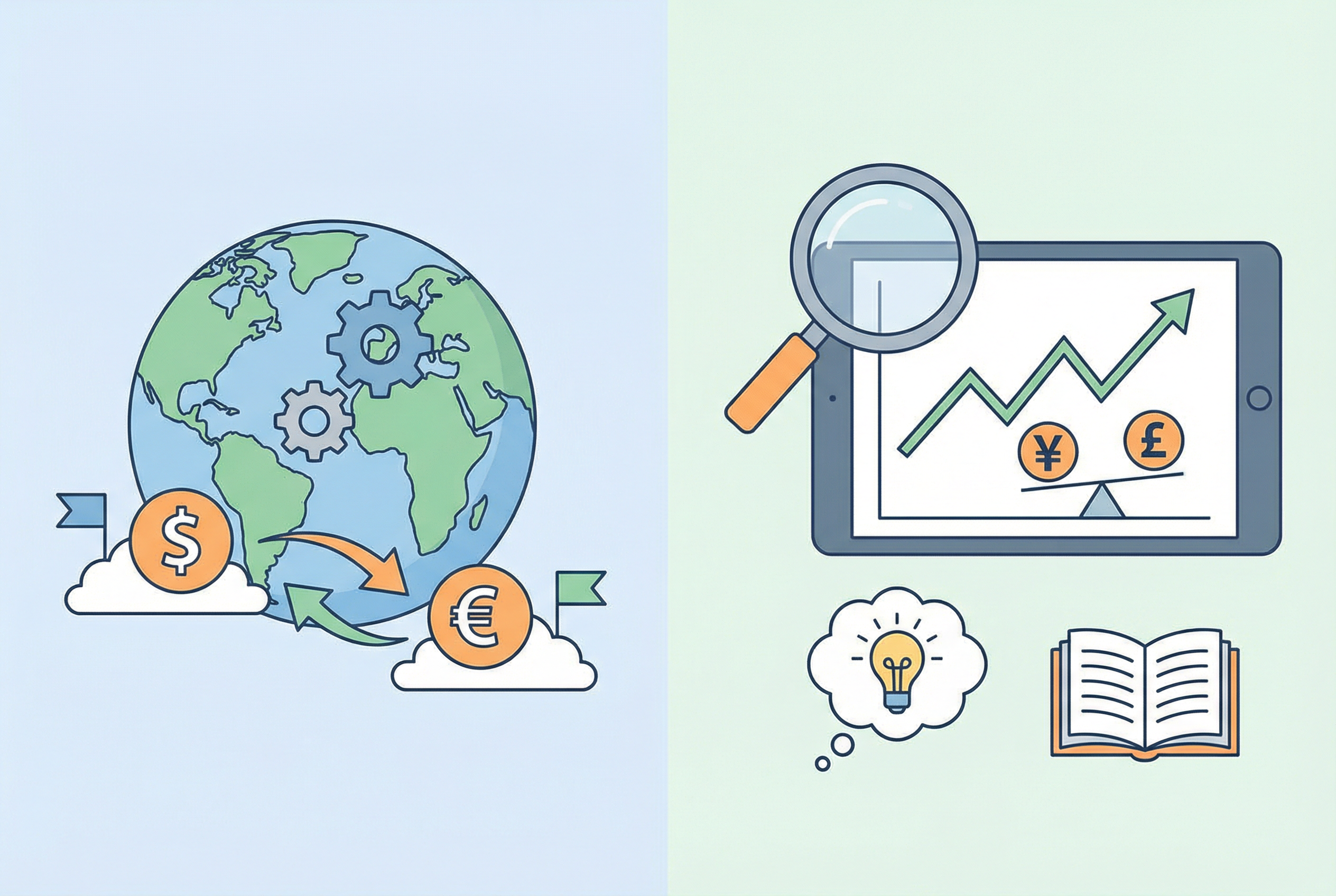
So, what is this beast, the Forex market? At its core, it’s surprisingly simple. Think about the last time you traveled to another country. You probably had to exchange your home currency for the local one, right? That’s a forex transaction. You’re participating in the foreign exchange market. On a massive scale, this is what forex trading is: the buying and selling of currencies with the goal of making a profit from the change in their value. When I first started, I thought it was just numbers on a screen, but it’s so much more. It’s the pulse of the global economy. Every time a multinational corporation does business overseas, or a central bank tries to stabilize its currency, they’re in the forex market. As a trader, you’re essentially speculating on the future strength or weakness of a country’s currency. It’s a dynamic, fascinating world, and once you learn forex trading, you start to see the global news in a whole new light.
The Building Blocks: Understanding Currency Pairs
In the stock market, you trade shares of a company. In forex, you trade currencies, and they always come in pairs. You’re always buying one currency while simultaneously selling another. This is a fundamental concept that trips up a lot of beginners. Let’s break it down.
Majors, Minors, and Exotics
Not all currency pairs are created equal. They fall into three main categories:
- The Majors: These are the big dogs of the forex world. They all involve the US Dollar (USD) paired with another major currency, like the Euro (EUR), Japanese Yen (JPY), British Pound (GBP), or Swiss Franc (CHF). Think EUR/USD or USD/JPY. They are the most traded, have the highest liquidity (meaning you can easily buy and sell), and typically have the lowest transaction costs (spreads).
- The Minors (or Cross-Pairs): These pairs consist of major currencies that are traded against each other, without involving the US Dollar. Examples include EUR/GBP, GBP/JPY, or AUD/CAD. They are still quite liquid but a bit less so than the majors.
- The Exotics: This is where things get interesting. An exotic pair consists of one major currency paired with the currency of an emerging or smaller economy. Think USD/MXN (US Dollar/Mexican Peso) or EUR/TRY (Euro/Turkish Lira). These pairs are less liquid, more volatile, and have wider spreads, which means they are riskier but can also offer higher profit potential if you know what you’re doing.
How to Read a Quote
When you see a currency pair like EUR/USD = 1.0850, here’s what it means:
- Base Currency: The first currency in the pair (EUR). It’s the one you are buying or selling.
- Quote Currency: The second currency (USD). It’s the price of the base currency.
- The Price: So, 1 Euro is worth 1.0850 US Dollars.
You’ll also see two prices: the bid and the ask. The bid is the price at which your broker will buy the base currency from you. The ask is the price at which they will sell it to you. The difference between these two prices is the spread, which is essentially the broker’s fee for the transaction.
| Feature | Major Pairs | Minor Pairs |
|---|---|---|
| Examples | EUR/USD, USD/JPY, GBP/USD | EUR/GBP, GBP/JPY, AUD/CAD |
| Liquidity | Very High | High |
| Volatility | Lower | Moderate |
| Spread | Very Tight | Tight |
How to Trade Forex: A Step-by-Step Guide for Beginners
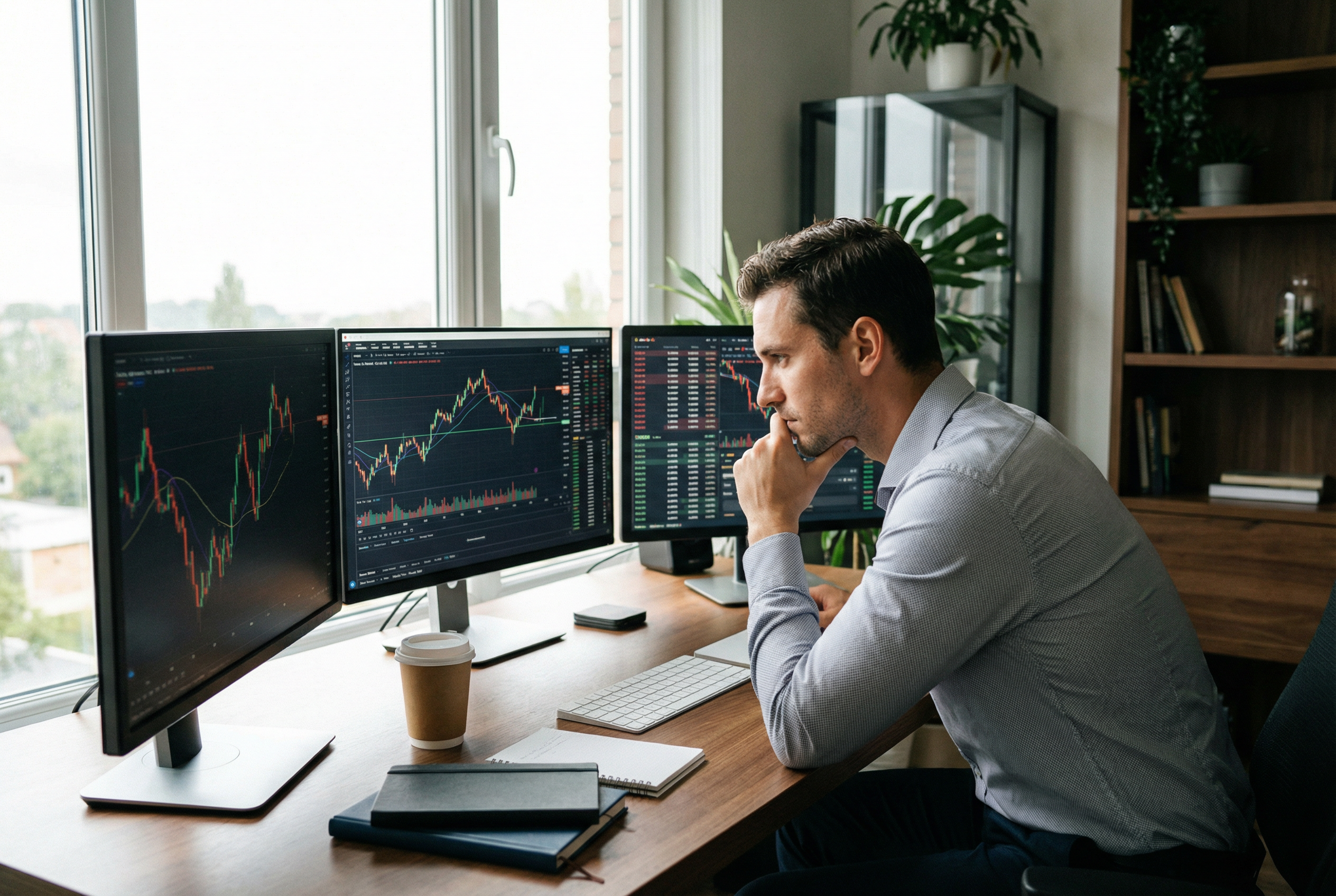
Alright, so you understand what forex is and you know about currency pairs. Now for the exciting part: how do you actually trade it? Here’s the thing, it’s not as simple as just clicking a ‘buy’ button and hoping for the best. Successful trading is about process and discipline. Here’s a simple, step-by-step guide on how to trade forex for complete beginners.
- Find a Reputable Broker. This is your first and most important decision. Your broker is your gateway to the forex market. You need a broker that is regulated, has a good reputation, offers a user-friendly platform, and has fair fees. Don’t just go with the first one you see. Do your research. I’ve seen too many new traders get burned by shady brokers. For a great starting point, check out our in-depth review of the best forex brokers for beginners in 2025.
- Open a Demo Account. I cannot stress this enough: do not jump in with real money right away. Every decent broker offers a free demo account with virtual money. Use it. This is your sandbox. Get comfortable with the trading platform, test out different strategies, and make your first mistakes without losing a single dollar. I ‘blew up’ at least three demo accounts before I even considered going live. It’s a rite of passage.
- Start Learning Analysis. This is where the real work begins. You need to learn how to analyze the market to make informed trading decisions. As we’ll discuss next, this comes in two main flavors: technical analysis (reading charts) and fundamental analysis (following news and economic data). You don’t need to be an expert overnight, but you need to learn the basics.
- Develop a Trading Plan. A trading plan is your rulebook. It defines what you will trade, when you will trade, how you will enter and exit trades, and how you will manage risk. Trading without a plan is just gambling. Your plan will be your guide when emotions run high.
- Go Live (with a Small Account). Once you’ve had consistent success on a demo account and have a solid trading plan, you can consider opening a live account. But start small. I mean, really small. The psychology of trading with real money, even a small amount, is completely different from demo trading. The goal here isn’t to get rich, it’s to get used to the psychological pressure of having real skin in the game.
Two Schools of Thought: Technical vs. Fundamental Analysis
When it comes to analyzing the forex market, you’ll find traders generally fall into two camps: technical analysts and fundamental analysts. Honestly, the whole debate of which one is “better” is pointless. The best traders I know use a blend of both. Think of it like being a detective; you need to look at all the evidence.
Technical Analysis: Reading the Market’s Story
Technical analysis is all about the chart. It’s the art and science of forecasting future price movements by examining past price data. Technical traders believe that all known information is already reflected in the price, so all you need to do is study the price action itself. It’s like learning to read the market’s language. You’ll use tools like:
- Candlestick Charts: These are the lifeblood of technical analysis, showing you the open, high, low, and close price for a specific period.
- Trend Lines: Drawing lines on your chart to identify the direction of the market.
- Support and Resistance: Key price levels where the market has tended to reverse in the past.
- Indicators: Mathematical calculations based on price and/or volume. There are thousands of them, but you only need to master a few. If you want to dive deeper, we have a great resource on the top 5 forex technical indicators that are actually reliable.
Fundamental Analysis: Understanding the ‘Why’
If technical analysis is the “what,” fundamental analysis is the “why.” This approach involves looking at the economic, social, and political forces that drive currency values. It’s about understanding the big picture. Fundamental traders pay close attention to:
- Interest Rates: This is probably the single biggest driver of currency values.
- Economic Data: Things like GDP growth, inflation, employment numbers, and retail sales.
- Central Bank Policy: What are the heads of the central banks saying? Are they hawkish (likely to raise rates) or dovish (likely to cut rates)?
- Geopolitical Events: Elections, political instability, and major global events can all have a huge impact on the forex market.
| Aspect | Technical Analysis | Fundamental Analysis |
|---|---|---|
| Primary Goal | Identify trading opportunities from price patterns and trends. | Determine a currency’s intrinsic value based on economic factors. |
| Main Tools | Charts, indicators (MACD, RSI), trend lines, support/resistance. | Economic calendars, news reports, central bank statements, GDP data. |
| Timeframe | Short-term to medium-term (minutes to weeks). | Medium-term to long-term (weeks to years). |
| Trader’s Mindset | “The price tells me everything I need to know.” | “I need to understand the economic reasons for price movement.” |
Forex Trading Strategies for Different Styles
Once you have a grasp of analysis, you need to decide on a trading style that fits your personality and schedule. There’s no single “best” strategy; there’s only the best strategy for you. Here are some of the most common forex trading strategies you’ll encounter:
- Scalping: This is the fastest style of trading. Scalpers aim to make a large number of very small profits throughout the day. They might be in and out of a trade in just a few seconds or minutes. It’s intense, requires incredible focus, and is not for the faint of heart. Honestly, I find it exhausting, but some traders thrive on the adrenaline.
- Day Trading: As the name suggests, day traders open and close their positions within the same trading day, ensuring they have no open trades overnight. This style avoids the risk of overnight news events affecting their positions. It still requires a significant time commitment during the day to monitor the markets.
- Swing Trading: This is my personal favorite and the style I recommend most beginners aim for. Swing traders hold their trades for several days or even weeks, aiming to capture the “swings” in the market. It requires less screen time than scalping or day trading, and it allows you to catch larger market moves. It’s a great balance for people who have a day job or can’t be glued to their charts all day. You can learn more about this style in our article on scalping vs swing trading.
- Position Trading: This is the longest-term trading style. Position traders hold trades for weeks, months, or even years. Their decisions are based almost entirely on fundamental analysis and long-term macroeconomic trends. It requires immense patience and a deep understanding of global economics.
| Strategy | Timeframe | Frequency of Trades | Best For |
|---|---|---|---|
| Scalping | Seconds to Minutes | Very High | Traders who can dedicate full attention and make quick decisions. |
| Day Trading | Minutes to Hours | High | Traders with time to analyze markets throughout the day. |
| Swing Trading | Days to Weeks | Low to Medium | Beginners and those with limited time. |
| Position Trading | Weeks to Years | Very Low | Long-term investors with strong fundamental knowledge. |
The Unsexy But Crucial Part: Risk Management
Let’s talk about the part of trading that no one finds glamorous, but is arguably the most important: risk management. You can have the best strategy in the world, but if you have poor risk management, you will lose money. It’s that simple. The number one rule of trading is to never risk more than you can afford to lose. This isn’t just a catchy phrase; it’s the foundation of a long and successful trading career.
I learned this the hard way. Early in my trading journey, I got cocky after a few winning trades. I saw what I thought was a “sure thing” and I put way too much of my account on a single trade. I ignored my own rules. The trade went against me, and I was too stubborn to close it. I just watched in horror as my account balance plummeted. It was a painful, expensive lesson, but it taught me the vital importance of risk management. From that day on, I swore I would never make that mistake again.
So how do you manage risk effectively? Here are the key tools:
- Stop-Loss Orders: A stop-loss is an order you place with your broker to automatically close your trade if the price reaches a certain level. It’s your safety net. It takes the emotion out of the decision and protects you from catastrophic losses. You should know where your stop-loss will be before you even enter a trade.
- Take-Profit Orders: The flip side of a stop-loss, a take-profit order automatically closes your trade when it reaches a certain profit target. This helps you lock in profits and avoids the greedy temptation to let a winner run too long, only to see it reverse.
- Position Sizing: This is the most underrated aspect of risk management. It’s about determining how much of your account you will risk on a single trade. A common rule of thumb is to never risk more than 1-2% of your account on any single trade. This ensures that even a string of losses won’t wipe you out. For a deeper dive into this critical topic, I highly recommend reading our guide on how to minimize losses with forex risk management tools.
The Final Boss: Trading Psychology
If risk management is the foundation, then trading psychology is the final boss you must conquer to become a consistently profitable trader. You can have a great strategy and perfect risk management, but if your head isn’t right, you’ll find a way to sabotage yourself. I’ve seen it happen time and time again. The market is a mirror that reflects your own internal struggles with fear, greed, and discipline.
- Fear and Greed: These are the two primary emotions that destroy trading accounts. Fear causes you to close winning trades too early, or to be too scared to enter a valid trade setup. Greed causes you to hold onto winning trades for too long, hoping for that little bit extra, only to watch it all come crashing down. It also tempts you to over-leverage and take on way too much risk, hoping for a single massive win that will change your life. Here’s the thing: the market doesn’t care about your feelings. It will do what it’s going to do.
- Discipline and Patience: The antidote to emotional trading is unwavering discipline and a healthy dose of patience. Discipline is the ability to follow your trading plan, no matter what. It’s executing your trades according to your rules, not your feelings. Patience is waiting for the right trade setup to come to you, rather than forcing trades that aren’t there. Sometimes the most profitable action you can take is to do nothing at all.
- Keeping a Trading Journal: This is one of the most powerful tools for mastering your psychology. A trading journal is where you record not just your trades, but your thoughts and feelings about each trade. Why did you enter? Why did you exit? Were you feeling anxious? Confident? Greedy? Over time, your journal will reveal your psychological patterns and weaknesses, allowing you to work on them. It’s the key to self-improvement as a trader. For a comprehensive look at this topic, check out our complete forex trading psychology guide.
Frequently Asked Questions (FAQ)
How much money do I need to start forex trading?
Honestly, this is one of the most common questions I get. The technical answer is, not much. Many brokers allow you to open an account with as little as $100. However, I would strongly advise against starting with such a small amount. Trading with a tiny account puts you under immense psychological pressure and doesn’t allow for proper risk management. A more realistic starting capital would be in the range of $500 to $1,000. This gives you enough breathing room to place trades with proper position sizing and weather the inevitable losing trades without blowing up your account.
Is forex trading profitable?
Yes, forex trading can be very profitable, but it’s crucial to have realistic expectations. It is not a get-rich-quick scheme. The statistics are sobering: the vast majority of new traders lose money and quit. Profitability in forex comes from a combination of a solid strategy, disciplined risk management, and the right psychological mindset. It takes time, dedication, and a lot of learning. The successful traders are the ones who treat it like a business, not a lottery ticket.
What is the best time to trade forex?
The forex market is open 24 hours a day, five days a week, but not all times are created equal. The best time to trade is when the market is most active, which is during the overlap of the major trading sessions. The most significant overlap is between the London and New York sessions (from 8 AM to 12 PM EST). During this period, there is high liquidity and volatility, which can lead to better trading opportunities. Trying to trade during quiet periods can be frustrating, with prices moving very little.
Can I teach myself to trade forex?
Absolutely. In fact, I would argue that self-education is the best way to learn. There are countless online resources, books, and courses available. This very forex trading guide is a great starting point. The key is to be a critical thinker. Be wary of anyone promising guaranteed profits or selling a “holy grail” system. The most successful traders are lifelong learners who are constantly studying the markets and refining their craft. Start with the basics, use a demo account extensively, and gradually build your knowledge and experience.
What is leverage in forex trading?
Leverage is a double-edged sword. It allows you to control a large position with a small amount of capital. For example, with 100:1 leverage, you can control a $100,000 position with just $1,000 in your account. This can amplify your profits, but it can also amplify your losses just as quickly. For beginners, I strongly recommend using low leverage, or even no leverage at all, until you are consistently profitable on a demo account. High leverage is one of the fastest ways for new traders to blow up their accounts.
Is forex trading better than stocks?
“Better” is subjective; it depends on your goals and trading style. The forex market has some distinct advantages, such as being a 24-hour market, having high liquidity, and offering the ability to profit from both rising and falling prices easily. The stock market, on the other hand, gives you ownership in a company and can be more suitable for long-term, buy-and-hold investing. I personally enjoy the pace and global nature of forex, but many people have great success in the stock market. It’s about finding the market that resonates with you.
How long does it take to learn forex trading?
There’s no magic number. It’s a journey, not a destination. You can learn the basics in a few weeks, but it can take months or even years to become consistently profitable. The learning curve is steep, and there will be frustrating periods. The key is to focus on continuous improvement, not on a timeline. Celebrate the small wins, learn from your losses, and stay dedicated to the process.
What is the most important thing for a beginner to learn?
Without a doubt, the most important thing for a beginner to learn is risk management. I know it’s not the most exciting topic, but it is the one that will keep you in the game long enough to become successful. You can have the best trading strategy in the world, but if you don’t manage your risk properly, you will eventually lose all your money. Learn about position sizing, stop-loss orders, and the 1-2% rule, and apply them religiously.
References
- Investopedia. (2023). How To Start Forex Trading: A Guide To Making Money with FX. https://www.investopedia.com/articles/forex/11/why-trade-forex.asp
- FOREX.com. (n.d.). Trading Academy. https://www.forex.com/en-us/trading-academy/
- Charles Schwab. (n.d.). Foreign Exchange (Forex) Trading for Beginners. https://www.schwab.com/learn/story/foreign-exchange-forex-trading-beginners